 Business License
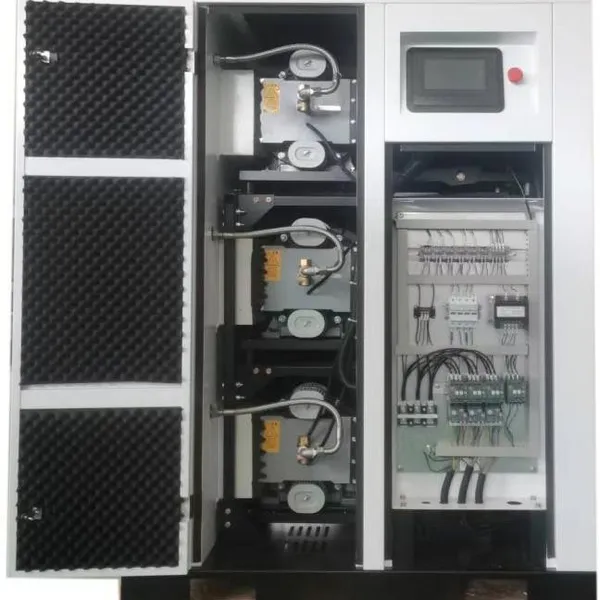
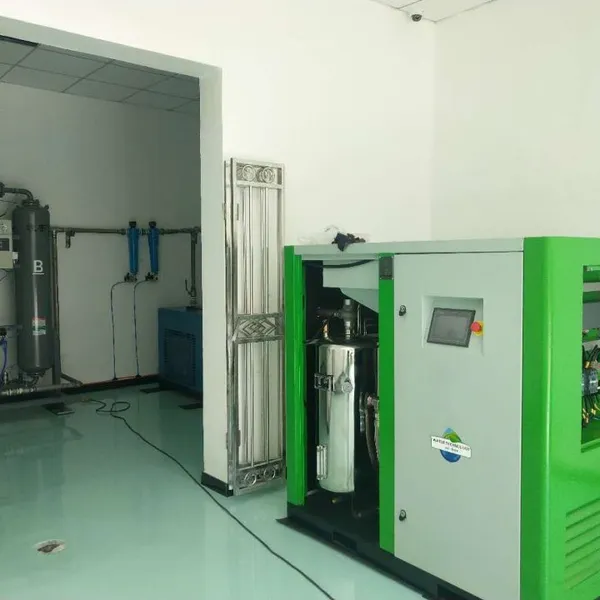
The technical advantages and application prospects of oil-free water-lubricated screw air compressor
In fields such as industrial manufacturing, pharmaceutical production, and food processing, air compressors serve as the core power equipment, and their performance directly affects production efficiency and product quality. However, traditional air compressors often suffer from problems such as lubricant contamination, high energy consumption, and complex maintenance. Against this backdrop, the oil-free water-lubricated single screw air compressor, with its unique technical approach and environmental-friendly attributes, has stood out and become an important direction for industry upgrading.
I. Technical Advantages Zero oil pollution, clean and efficient. Using pure water instead of traditional lubricants completely eliminates the risk of oil mist pollution. The output air cleanliness reaches ISO 8573-1 Class 0 standard, meeting the strict requirements of industries such as medicine, food, and electronics. It avoids system blockage caused by high-temperature carbonization of lubricants and extends the maintenance cycle by more than 50%. The energy efficiency is revolutionized. Water lubrication reduces the friction coefficient (reducing friction loss by 30%-40%), and is 15%-25% more energy-efficient compared to oil lubrication models. The potential for heat recovery is greater: the specific heat capacity of water medium is higher, and the efficiency of waste heat recovery can reach 80% (traditional models are approximately 60%). The full life cycle cost is optimized by eliminating oil filters, oil separators, and other consumables, reducing the annual maintenance cost by 40%. There is no need to handle waste oil, and the cost of environmental compliance is reduced by 90%. Extreme working condition adaptability: Water lubrication maintains stable lubrication performance in high-temperature environments (80-120℃), suitable for high-temperature workshops such as steel and chemical industries. It has strong resistance to moisture, with a 30% increase in fault-free operation rate in environments with humidity > 90%. II. Application Prospects Key industries accelerate penetration. Food and medicine: Replace existing oil-free vortex/piston machines to solve residual risks (for example, a dairy enterprise that adopted it saw a 99.9% reduction in microbial contamination rate). Electronics manufacturing: Ensure the clean gas source demand for chip packaging and LCD screen production (reducing the cost of gas supply per unit by 18%). New energy: Adapt to ultra-low humidity scenarios such as lithium battery drying rooms (-70℃ dew point). Policy-driven market expansion: Under China's "carbon neutrality" goal, the demand for industrial energy-saving equipment replacement will exceed 200 billion yuan by 2025. EU regulations (EU 2023/XXX) require a 50% reduction in oil mist emissions from air compressors, forcing technological upgrades. Technological iteration direction: Intelligent and connected: Integrate vibration/temperature sensors to achieve predictive maintenance (fault prediction accuracy > 95%). Material innovation: Ceramic-coated screw (3 times higher wear resistance) + graphite sealing components (lifespan extended to 80,000 hours). System integration: Linked power supply system with photovoltaic/storage, improving overall energy efficiency by 40%. III. Typical Cases and Data A semiconductor factory renovation project replaced 12 traditional air compressors, saving 3.6 million kWh of electricity per year and reducing CO₂ emissions by 2800 tons. The particle concentration in the clean room increased from Class 1000 to Class 100. Global market forecast: In 2023, the market size will reach 4.5 billion US dollars, and is expected to reach 7.8 billion US dollars in 2028 (CAGR 11.6%). The Asia-Pacific region leads the growth rate (China accounts for over 35%). Medical and data centers are emerging growth points. IV. Challenges and Countermeasures Technical bottleneck: The efficiency of gas-liquid separation at high rotational speeds (>12000 rpm) needs improvement. Solution: Multi-stage vortex separation + nano-film (separation efficiency > 99.99%). Initial cost: Equipment purchase price is 20%-30% higher than that of oil lubrication models. Countermeasure: Government subsidies (such as China's energy-saving subsidy covering 15% of the cost) + tiered electricity price discounts. Market awareness: Establish an industry white paper (such as "Selection Guide for Water Lubricated Air Compressors") and conduct benchmark factory open days (conversion rate increase by 40%). V. Summary The oil-free water lubricated single screw air compressor, with its core advantages of cleanliness, efficiency, and low carbon, is reshaping the industrial compressed air market landscape. With breakthroughs in material science and intelligent control technology, this technology will continue to unleash its potential in precision manufacturing, biomedicine, and green energy, and is expected to become a standard technology for industrial energy-saving renovations in the next five years. For enterprises, early planning not only aligns with ESG strategies but also brings significant energy efficiency benefits and market leading advantages.


Recently Posted
-
PM VSD Single-stage vs Two-stage PM VSD Screw Air Compressors: How to Choose the Right Energy-saving
August 18, 2026IntroductionCompressed air serves as the power heart of all manufacturing plants, yet air compressors always rank among the bigges Read More
 -
Why PM VFD Screw Air Compressors Are the Best Investment for Modern Factories in 2026
August 10, 2026In modern industrial manufacturing, compressed air is regarded as the “fourth utility” after electricity, water, and gas. It power Read More
 -
Oil-free Silent Air Compressor, Clean Air Source for Industry
July 27, 2026Silent Oil-Free Air Compressor: Principle, Advantages and Industrial ApplicationIntroductionA silent oil-free air compressor is a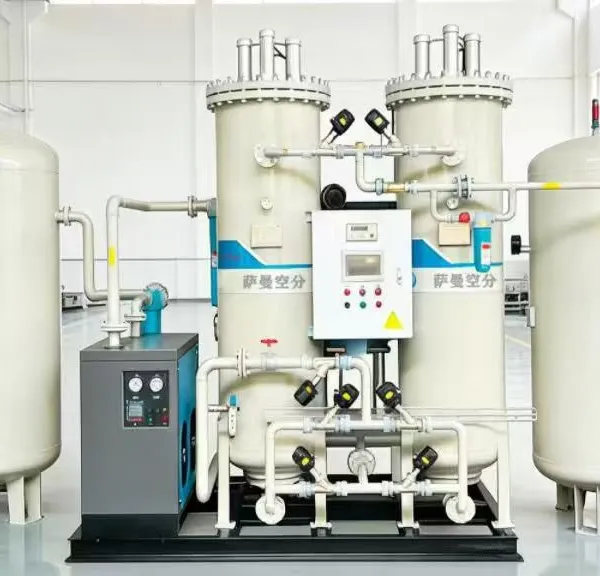 Read More
 -
The working principle and technical application of high-pressure screw air compressors
June 25, 2026Comprehensive Analysis of High-Pressure Screw Air Compressors: Principles, Technology, Applications, and Selection & Maintenan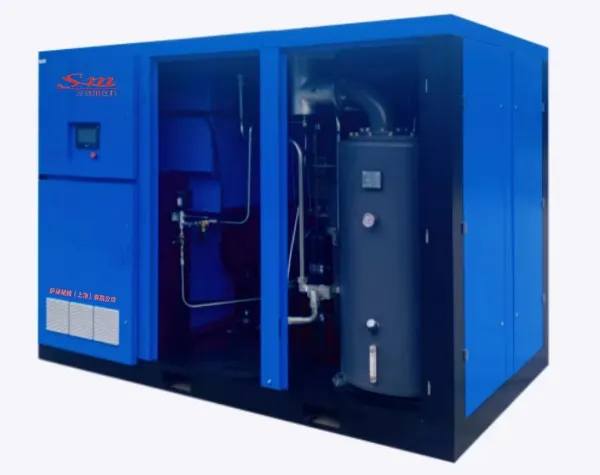 Read More

Contact Us
Recommended Products
-
 Saman Permanent Magnet Variable-frequency Screw Air Compressor, Energy-saving, Low Power Consumption, Quiet and Environmentally FriendlyNegotiableMOQ: 1 Piece
 -
Saman Permanent Magnet Variable-frequency Screw Air CompressorNegotiableMOQ: 1 Piece
-
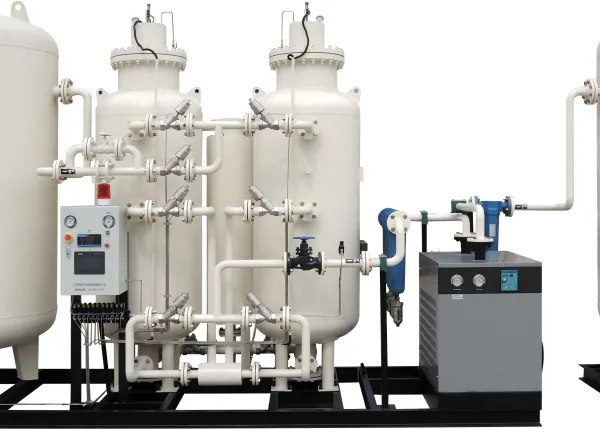
PSA Nitrogen Generator Industrial Nitrogen GeneratorNegotiableMOQ: 1 Piece
-
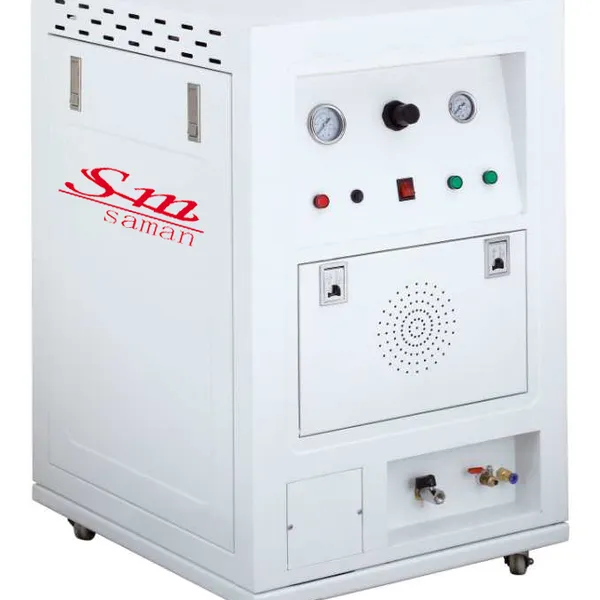
Silent Oil-free Air Compressor With Pure Gas Volume and 0 Oil ContentNegotiableMOQ: 1 Piece
-
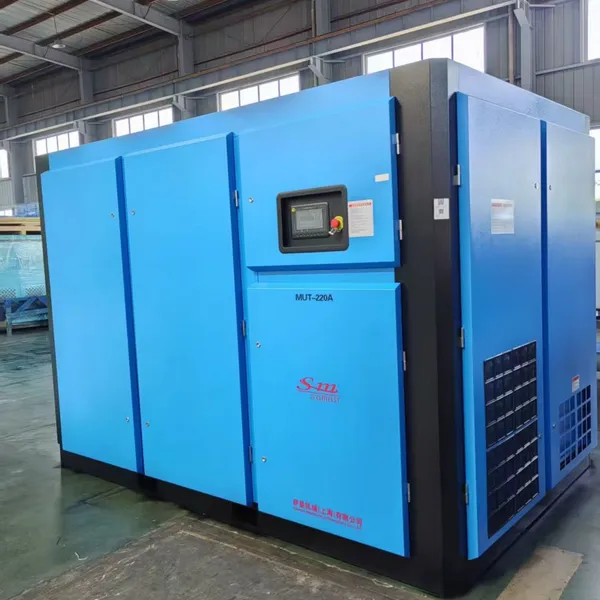
Saman Portable Medical Oil-Free Silent Air CompressorM550—M1500*4NegotiableMOQ: 1 Piece
-
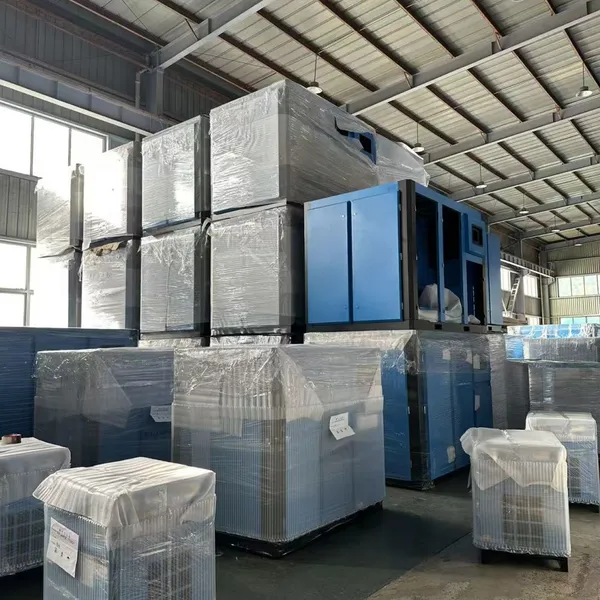
Saman High-Purity PSA Nitrogen Generator SMTYN01-SMTYN49NegotiableMOQ: 1 Piece
-
Saman Screw Air Compressor Manufacturer Directly Sells Products. There Are a Wide Variety of Models and Complete Series Available.NegotiableMOQ: 1 Piece
-
Saman Oil-free Vortex Air Compressor MW-11 - High-efficiency and Energy-saving Oil-free Air CompressorNegotiableMOQ: 1 Piece
-
Saman Oil-free Screw Air Compressor, Factory Direct Sales, Stable Quality, High Efficiency, and High Air OutputNegotiableMOQ: 1 Piece
-
Saman Permanent Magnet Variable-frequency Screw Air Compressor, Highly Efficient and Energy-savingNegotiableMOQ: 1 Piece
-
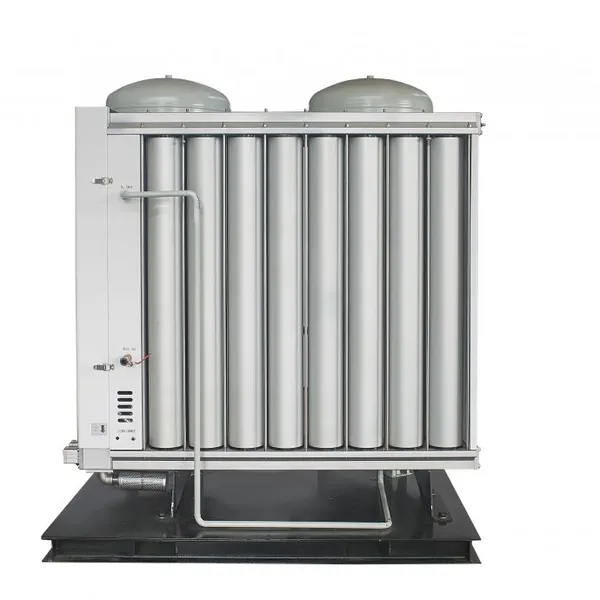
PSA Nitrogen Plant、Membrane Nitrogen Generator、Liquid Nitrogen Generator、Cryogenic Nitrogen PlantNegotiableMOQ: 1 Piece
-
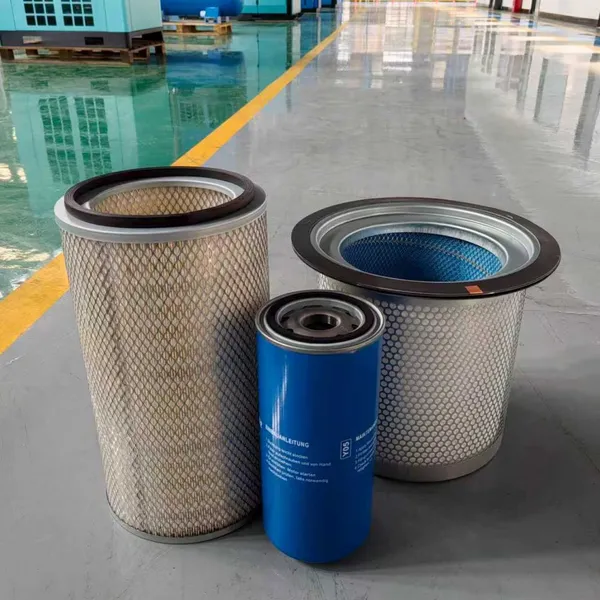
Screw Air Compressor Three Filters, Air Filter Element, Oil Filter Element, Oil Separation ElementNegotiableMOQ: 1 Piece
-
Saman Permanent Magnet Variable Frequency Screw Air Compressor MV-150ANegotiableMOQ: 1 Piece
-
Saman PSA Nitrogen Generator One-stop Service Provider for High-quality Nitrogen SolutionsNegotiableMOQ: 1 Piece
-
Saman Screw-type Air Compressor, Permanent Magnet Variable-frequency Air Compressor, Double-stage Compression Screw Air CompressorNegotiableMOQ: 1 Piece
-
The Saman Mobile Screw Air Compressors Can be Divided Into Diesel Mobile Screw Air Compressors and Electric Mobile Screw Air Compressors.NegotiableMOQ: 1 Piece
-
Saman Pressure Swing Adsorption Nitrogen Generator, One-Stop Service for High-Quality Nitrogen SolutionsNegotiableMOQ: 1 Piece
-
Saman Screw Air Compressor Specializes in Providing Complete Air Compressors and Three-filter Consumables.NegotiableMOQ: 1 Piece
-
Saman Screw Vacuum Pump, With a Complete Range and a Wide Variety of Options, Offering High Selectivity.NegotiableMOQ: 1 Piece
-
Saman Permanent Magnet Variable Frequency Screw Air Compressor MV-150A, With a Power of 110KW and a Flow Rate of 20m³NegotiableMOQ: 1 Piece