 Business License
Advantages of two-stage compression and single-stage compression screw air compressors
Screw air compressors, as the mainstream air compression equipment in the industrial field, can be classified into single-stage compression (single-stage compression) and two-stage compression based on the number of compression stages. There are significant differences in working principles, energy efficiency, and operational stability between the two types, and their applicable scenarios also have distinct focuses. This article conducts a core dimension comparison to clearly present the advantages of both, providing a reference basis for enterprise selection.
I. Core Working Principle Differences (Advantage Basis)
1. Single-stage compression screw air compressor
It uses one pair of male and female rotors to compress air from the suction pressure to the target exhaust pressure in one step, with no intermediate cooling process. Its core advantage lies in the simplified structure: only one set of compression rotor, transmission system, and cooling device is required. The mechanical transmission chain is short, and the number of fault points is few, laying the foundation for subsequent low-cost operation and high reliability.
2. Two-stage compression screw air compressor
It uses two independent rotors to complete the compression in stages: the first-stage rotor compresses the air to the medium pressure state, which is then cooled by an intermediate cooler (oil mist spraying or air cooling), and enters the second-stage rotor for a second compression to the target pressure. This design uses "stage compression + intermediate cooling" to make the compression process closer to the ideal isothermal compression state, breaking through the energy efficiency bottleneck of single-stage compression from the thermodynamic principle, and reducing the component load caused by the single-stage compression ratio.
II. Comparison of Key Advantage Dimensions
1. Energy Efficiency: The energy-saving advantage of two-stage is significant, and single-stage is suitable for low-pressure scenarios
• Advantages of two-stage compression: Due to the close approach to isothermal compression, the energy-saving effect is prominent. Under the same power, it has a 10%-30% efficiency improvement compared to single-stage compression, especially in high-pressure scenarios (0.8-1.6 MPa), with more obvious energy-saving effects. Some models can exceed the new national standard level one energy efficiency. For example, a 10 m³/min unit can save 15,000 kWh of electricity per year, and a certain heavy industry enterprise in Shandong replaced a single-stage unit with a two-stage unit, saving 2.24 million kWh of electricity per year, with a cost-saving benefit of over 1.7 million yuan. In addition, the staged compression reduces gas backflow leakage and increases volumetric efficiency, allowing the same power to increase gas output by 13%-15%.
• Advantages of single-stage compression: In low compression ratio (exhaust gauge pressure 0.4-0.7 MPa) scenarios, due to the simple structure without intermediate energy loss, its energy efficiency is 3%-5% higher than that of two-stage compressors, and it has a small energy consumption advantage. For low-pressure and small-displacement requirements, there is no need to pay additional energy costs for the staged structure.
2. Exhaust Performance: Two-stage has strong adaptability for high-pressure and large-flow scenarios, while single-stage is sufficient for low-pressure scenarios
• Advantages of two-stage compression: The upper limit of exhaust pressure is high, with standard models reaching 175 psi, and industrial-grade models can reach 250 psi, capable of stably meeting the continuous gas supply requirements of high-pressure tools such as impact wrenches and sandblasting equipment. At high-pressure conditions, it can still maintain a high CFM (cubic feet per minute) output, supporting the continuous operation of multiple tools simultaneously, and meeting the continuous gas supply requirements of large-scale industrial production.
• Advantages of single-stage compression: In low-pressure scenarios (110-135 psi), it has an advantage in CFM output, capable of meeting intermittent gas supply requirements of light pneumatic tools such as nail guns and tire inflation. The structure responds quickly, and the bursts of short-time supply performance is stable without the need for complex control to adapt to simple operation scenarios.
3. Operational Stability and Lifespan: Two-stage has a low-load long lifespan, and the single-stage structure is reliable and easy to maintain
• Advantages of two-stage compression: The total compression ratio is distributed to two stages, reducing the single-stage compression ratio, reducing the load on the rotor and shaft by 30% or more, and significantly reducing component wear; Intermediate cooling reduces the exhaust temperature by 30-40℃ (from 110℃ to 70℃ under the same conditions), preventing lubricant deterioration and carbide formation, extending the bearing life by 3-5 years, and increasing the service life of the main unit to over 100,000 hours. Additionally, low-speed operation brings advantages of low vibration and low noise, and some models further reduce operating noise through variable-frequency fans, enhancing the comfort of the workshop environment.
• Advantages of single-unit compression: The core moving parts consist of only one pair of male and female rotors, without intermediate coolers or secondary transmissions, resulting in fewer wear parts and lower failure rates. Under normal maintenance, the main unit can have a lifespan of 8,000-15,000 hours. The maintenance process is simple, and basic operations such as replacing air filters and cleaning radiators can be completed without professional personnel. The downtime for maintenance is short, and the operation can be quickly resumed.
4. Cost investment: The initial cost of a single-stage unit is low, while the long-term benefits of a two-stage unit are high.
• Advantages of two-stage compression: The total long-term cost is lower. Although the initial purchase cost is 15%-25% higher than that of a single-stage unit, through significant energy-saving effects, most enterprises can recover the cost difference within 2-3 years. For a 100m³/min-8bar model, within a 10-year lifespan, the total cost of the two-stage unit is 6.2 million yuan lower than that of the single-stage unit, with the largest savings coming from electricity costs.
• Advantages of single-unit compression: The initial investment is favorable, the purchase cost is low, and it is suitable for small and medium-sized enterprises with limited budgets. The maintenance cost is only about 80% of that of the two-stage unit, and there is no need to pay additional maintenance fees for secondary rotors or intermediate cooling systems. The short-term investment return is fast, and it is suitable for enterprises with tight capital turnover or short-term operation projects.
III. Precise Matching of Application Scenarios
1. Application scenarios of two-stage compression screw air compressors
Suitable for industrial fields that require 24-hour continuous production (such as food processing, pharmaceutical manufacturing, and heavy machinery); scenarios with high-pressure gas demand (exhaust pressure ≥ 0.8MPa); enterprises that require long-term energy-saving benefits due to fluctuating gas consumption; workshops with high requirements for operation noise and environmental comfort; areas in plateau regions (with low suction pressure and requiring high compression ratio) and other complex conditions.
2. Application scenarios of single-unit compression screw air compressors
Suitable for small and medium-sized enterprises with low gas consumption requirements (exhaust pressure ≤ 0.7MPa); intermittent operation scenarios such as automotive repair and small hardware processing; places with small gas consumption (<1m³/min) and simple operation processes; enterprises with limited budgets and seeking short-term investment returns or temporary projects.
IV. Summary
Two-stage compression screw air compressors have the core advantages of "high energy efficiency, high stability, and long lifespan", and are suitable for industrial scenarios with large-scale, continuous production, and high-pressure requirements, with outstanding long-term usage performance; single-unit compression screw air compressors have the core advantages of "low cost, simple structure, and easy maintenance", and are more suitable for small and medium-sized enterprises, intermittent operation, and simple scenarios with low gas consumption, with faster short-term investment returns. Enterprises should choose based on their gas pressure, gas consumption, operation duration, and budget, balancing initial investment and long-term benefits to achieve the optimal matching of the compressed air system.


Recently Posted
-
PM VSD Single-stage vs Two-stage PM VSD Screw Air Compressors: How to Choose the Right Energy-saving
August 18, 2026IntroductionCompressed air serves as the power heart of all manufacturing plants, yet air compressors always rank among the bigges Read More
 -
Why PM VFD Screw Air Compressors Are the Best Investment for Modern Factories in 2026
August 10, 2026In modern industrial manufacturing, compressed air is regarded as the “fourth utility” after electricity, water, and gas. It power Read More
 -
Oil-free Silent Air Compressor, Clean Air Source for Industry
July 27, 2026Silent Oil-Free Air Compressor: Principle, Advantages and Industrial ApplicationIntroductionA silent oil-free air compressor is a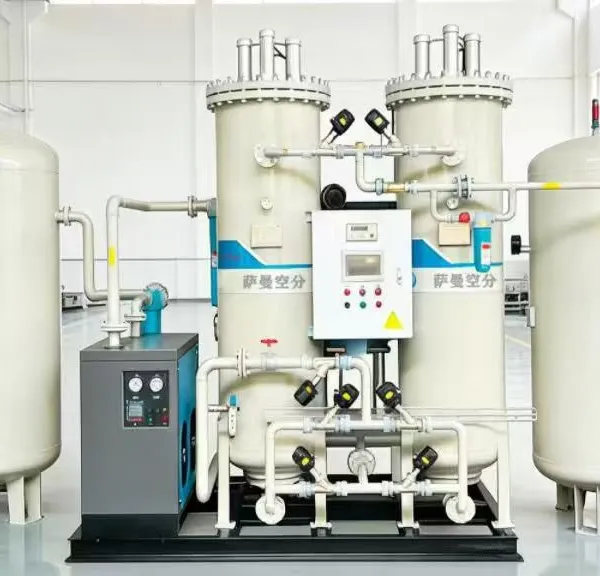 Read More
 -
The working principle and technical application of high-pressure screw air compressors
June 25, 2026Comprehensive Analysis of High-Pressure Screw Air Compressors: Principles, Technology, Applications, and Selection & Maintenan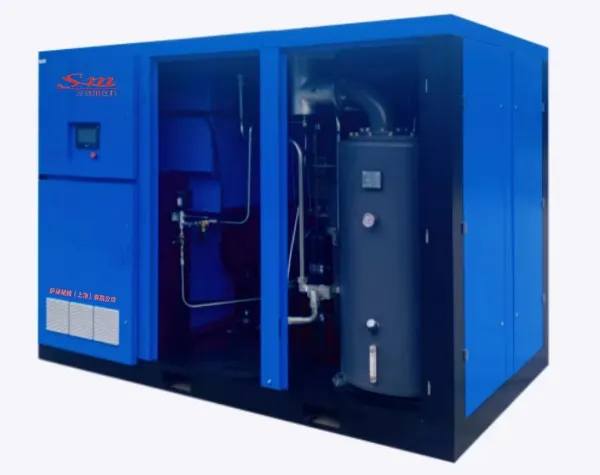 Read More

Contact Us
Recommended Products
-
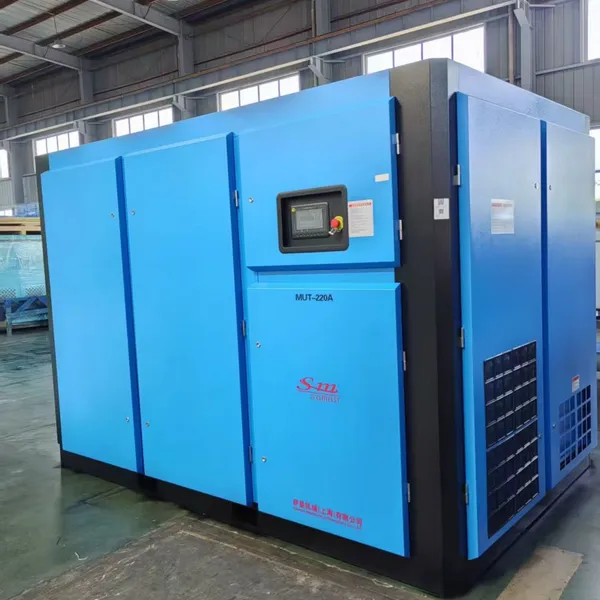
 Saman Permanent Magnet Variable-frequency Screw Air Compressor, Energy-saving, Low Power Consumption, Quiet and Environmentally FriendlyNegotiableMOQ: 1 Piece
 -
Saman Permanent Magnet Variable-frequency Screw Air CompressorNegotiableMOQ: 1 Piece
-
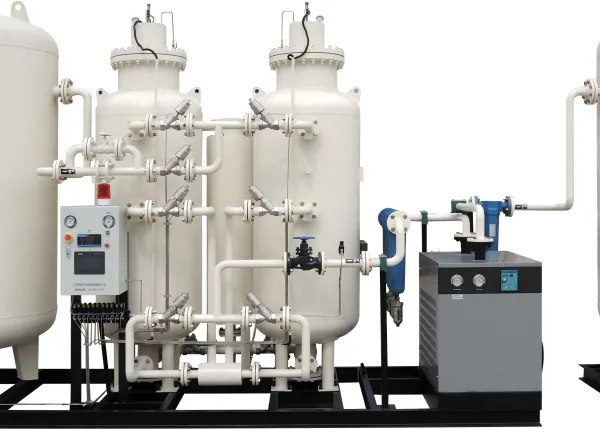
PSA Nitrogen Generator Industrial Nitrogen GeneratorNegotiableMOQ: 1 Piece
-
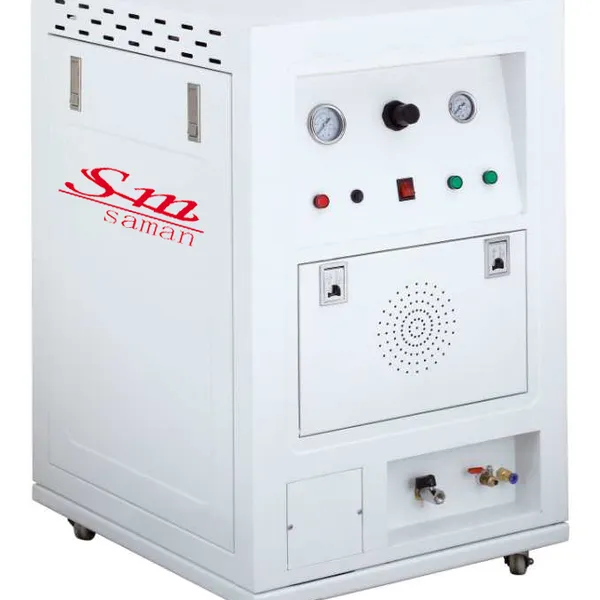
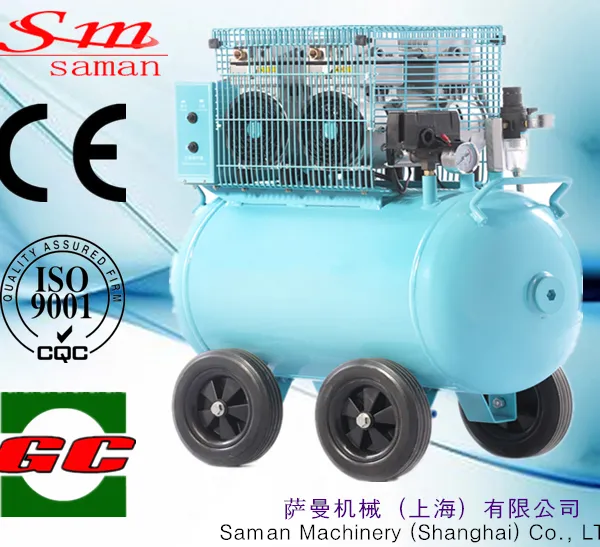
Silent Oil-free Air Compressor With Pure Gas Volume and 0 Oil ContentNegotiableMOQ: 1 Piece
-
Saman Portable Medical Oil-Free Silent Air CompressorM550—M1500*4NegotiableMOQ: 1 Piece
-
Saman High-Purity PSA Nitrogen Generator SMTYN01-SMTYN49NegotiableMOQ: 1 Piece
-
Saman Screw Air Compressor Manufacturer Directly Sells Products. There Are a Wide Variety of Models and Complete Series Available.NegotiableMOQ: 1 Piece
-
Saman Oil-free Vortex Air Compressor MW-11 - High-efficiency and Energy-saving Oil-free Air CompressorNegotiableMOQ: 1 Piece
-
Saman Oil-free Screw Air Compressor, Factory Direct Sales, Stable Quality, High Efficiency, and High Air OutputNegotiableMOQ: 1 Piece
-
Saman Permanent Magnet Variable-frequency Screw Air Compressor, Highly Efficient and Energy-savingNegotiableMOQ: 1 Piece
-
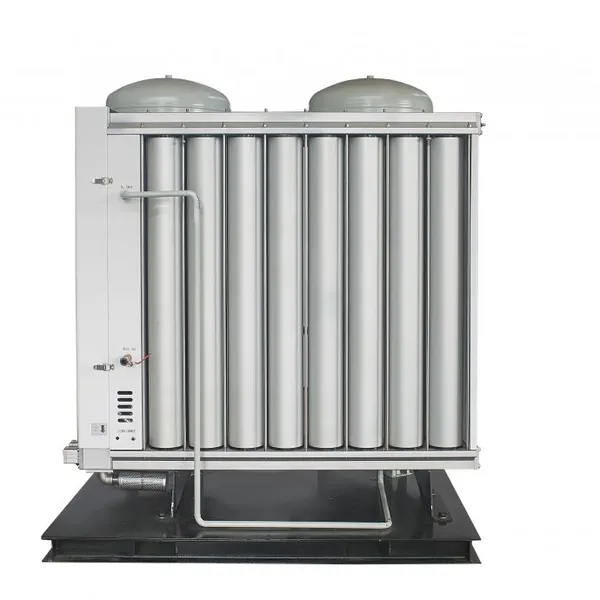
PSA Nitrogen Plant、Membrane Nitrogen Generator、Liquid Nitrogen Generator、Cryogenic Nitrogen PlantNegotiableMOQ: 1 Piece
-
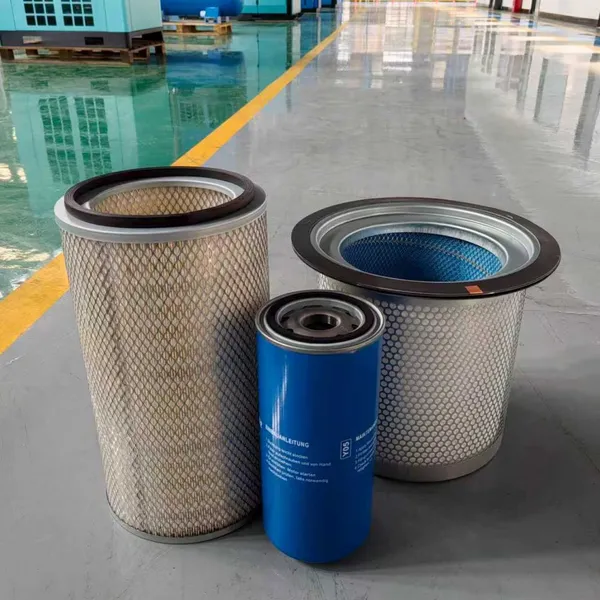
Screw Air Compressor Three Filters, Air Filter Element, Oil Filter Element, Oil Separation ElementNegotiableMOQ: 1 Piece
-
Saman Permanent Magnet Variable Frequency Screw Air Compressor MV-150ANegotiableMOQ: 1 Piece
-
Saman PSA Nitrogen Generator One-stop Service Provider for High-quality Nitrogen SolutionsNegotiableMOQ: 1 Piece
-
Saman Screw-type Air Compressor, Permanent Magnet Variable-frequency Air Compressor, Double-stage Compression Screw Air CompressorNegotiableMOQ: 1 Piece
-
The Saman Mobile Screw Air Compressors Can be Divided Into Diesel Mobile Screw Air Compressors and Electric Mobile Screw Air Compressors.NegotiableMOQ: 1 Piece
-
Saman Pressure Swing Adsorption Nitrogen Generator, One-Stop Service for High-Quality Nitrogen SolutionsNegotiableMOQ: 1 Piece
-
Saman Screw Air Compressor Specializes in Providing Complete Air Compressors and Three-filter Consumables.NegotiableMOQ: 1 Piece
-
Saman Screw Vacuum Pump, With a Complete Range and a Wide Variety of Options, Offering High Selectivity.NegotiableMOQ: 1 Piece
-
Saman Permanent Magnet Variable Frequency Screw Air Compressor MV-150A, With a Power of 110KW and a Flow Rate of 20m³NegotiableMOQ: 1 Piece