 Business License
What are the differences between single-stage and double-stage screw air compressors?
First, the core conclusion: Single-stage = one compression, simple structure, low cost, suitable for low pressure and short-term use; Double-stage = two stages + inter-stage cooling, more energy-efficient, longer lifespan, suitable for high pressure / continuous heavy load. Below, the differences are explained in six dimensions: principle, structure, energy efficiency, pressure, lifespan, cost, and selection:
I. Core Principle and Structure (The most fundamental difference)
Single-stage screw air compressor
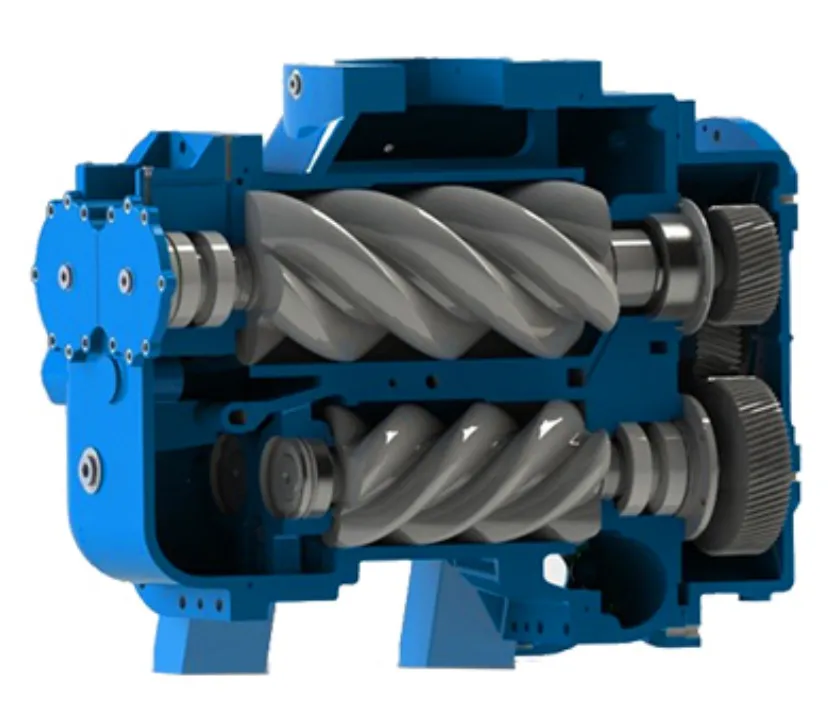
Principle: One set of male and female rotors, compressing in one go - air intake → single-stage rotor meshing compression → directly to target pressure → exhaust, no inter-stage cooling
Structure: Single head, single rotor set, no independent inter-stage cooler; compact structure, fewer parts, smaller volume, lighter weight
Compression ratio: The single stage bears the entire compression ratio (0.1MPa → 0.8MPa, compression ratio ≈ 8; limit ≤ 13), rotor / bearing load is high
Double-stage screw air compressor (Double-stage)
Principle: Two stages in series + inter-stage forced cooling - first stage compression (to 0.3~0.5MPa intermediate pressure) → inter-stage cooler to cool down (close to intake temperature) → second stage compression → to final pressure; reduces compression ratio in two steps, controls temperature rise, close to isothermal compression (most energy-efficient)
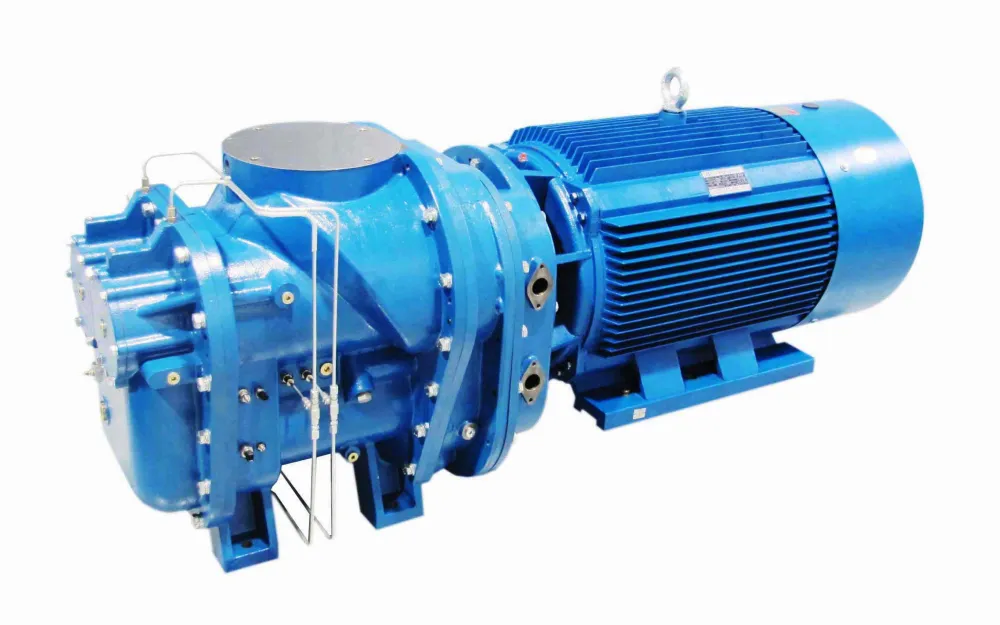
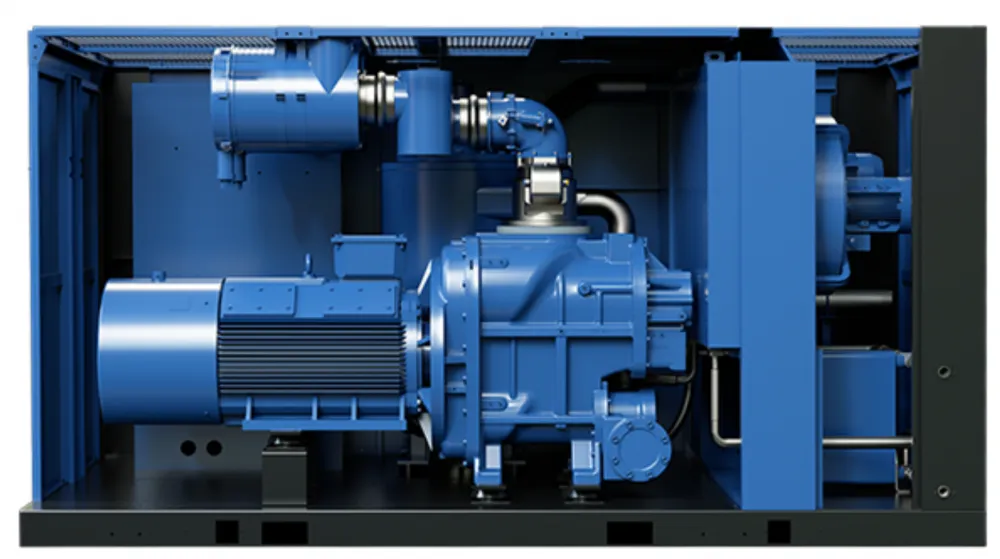
Structure: Dual rotor sets (low-pressure stage + high-pressure stage), dedicated inter-stage cooler, more refined oil and gas separation; complex structure, larger volume, heavier weight
Compression ratio: Divided between the two stages (each stage 3~4), single-stage load significantly reduced, internal leakage decreased, volumetric efficiency improved
II. Energy Efficiency and Energy Consumption (The most core advantage difference)
Single-stage: Mainly adiabatic compression, rapid temperature rise (exhaust at 0.8MPa is about 85~105℃), large heat loss, high specific power (about 6.0~6.4 kW/(m³/min)); efficiency drops significantly under high pressure / high-temperature conditions
Double-stage: Inter-stage cooling reduces the first-stage exhaust from over 80℃ to below 40℃, significantly reducing the second-stage compression power consumption; under the same conditions, it saves 10%~20% energy compared to single-stage, with lower specific power (about 5.4~5.8 kW/(m³/min)), and the electricity savings from long-term continuous operation (>8h/day) are considerable
III. Pressure Range and Exhaust Temperature
Single-stage
Common pressure: 0.7~1.0 MPa (mainstream), generally no more than 1.6 MPa (higher pressures can lead to rotor / bearing overload, carbon buildup, and a sharp drop in lifespan)
Exhaust temperature: High, especially under full load / high-temperature conditions, which can lead to oil aging, carbon buildup, and coking, increasing maintenance risks
Double-stage
Common pressure: 0.8~4.0 MPa (stable output 1.6~3.0 MPa), covering medium and high-pressure scenarios (bottle blowing, high-pressure testing, chemical industry)
Exhaust temperature: Low (final exhaust ≤ 75~85℃), oil life extended, carbon buildup risk significantly reduced, operation more stable
IV. Lifespan, Reliability, and Noise
Single-stage
Lifespan: Main unit lifespan about 20,000 to 40,000 hours; under high compression ratios, rotors, bearings, and seals wear out quickly, with a higher failure rate
Noise / Vibration: High speed, concentrated load, noise about 68~78 dB(A), more vibration
Maintenance: Simple, easy to repair, cheap parts, short maintenance cycle
Double-stage
Lifespan: Main unit lifespan can reach 40,000 to 60,000 hours; lower single-stage compression ratio, smaller bearing load, less internal leakage, slower wear, lower failure rate, longer major maintenance cycle
Noise / Vibration: Lower speed, two-stage buffering, noise about 62~72 dB(A), less vibration, more stable operation
Maintenance: Complex, expensive parts, regular inspection of inter-stage cooler and oil circuit required, slightly higher maintenance cost
V. Investment and Operating Costs
Single-stage
Initial purchase: Cheaper (15%~30% lower than the same displacement double-stage), suitable for limited budgets, short-term / intermittent air use Operating costs: High electricity bills, frequent oil changes/major overhauls, higher total long-term (over 3 years) usage costs
Two-stage
Initial purchase: Expensive, large initial investment
Operating costs: 10% to 20% lower electricity bills, longer oil change intervals, fewer major overhauls; usually, the cost difference can be recovered through electricity savings within 2 to 3 years of continuous operation (over 6,000 hours per year), resulting in lower long-term total costs
VI. Selection and Applicable Scenarios (Direct Comparison)
Single-stage screw air compressors are more suitable for:
Pressure ≤ 1.0 MPa, small air consumption, intermittent operation (less than 8 hours per day)
Scenarios with limited budgets and low energy-saving requirements (automobile repair, decoration, small pneumatic tools, light processing)
Compact spaces where small equipment is required
Two-stage screw air compressors are more suitable for:
Pressure ≥ 1.0 MPa, medium to high pressure (1.6 to 3.0 MPa) requirements
Continuous 24-hour operation, large air volume, high load (textile, electronics, chemical, PET bottle blowing, mining, large-scale manufacturing)
Enterprises that pursue long-term energy savings, low maintenance, high stability, and low noise
Quick Comparison Table (At a Glance)
Comparison Item Single-stage Screw Air Compressor Two-stage Screw Air Compressor
Compression Stages 1 stage (one pair of rotors) 2 stages (two pairs of rotors in series)
Inter-stage Cooling No Yes (forced intermediate cooling)
Common Pressure 0.7 to 1.0 MPa, ≤ 1.6 MPa 0.8 to 4.0 MPa, 1.6 to 3.0 MPa (mainstream)
Exhaust Temperature 85 to 105°C 75 to 85°C
Energy Efficiency (Specific Power) 6.0 to 6.4 kW/(m³/min) 5.4 to 5.8 kW/(m³/min), energy savings of 10% to 20%
Main Engine Life 20,000 to 40,000 hours 40,000 to 60,000 hours
Purchase Cost Low High (+15% to 30%)
Applicable Scenarios Low pressure, intermittent, small air volume, tight budget Medium to high pressure, continuous, high load, long-term energy savings
Recently Posted
-
PM VSD Single-stage vs Two-stage PM VSD Screw Air Compressors: How to Choose the Right Energy-saving
August 18, 2026IntroductionCompressed air serves as the power heart of all manufacturing plants, yet air compressors always rank among the bigges Read More
 -
Why PM VFD Screw Air Compressors Are the Best Investment for Modern Factories in 2026
August 10, 2026In modern industrial manufacturing, compressed air is regarded as the “fourth utility” after electricity, water, and gas. It power Read More
 -
Oil-free Silent Air Compressor, Clean Air Source for Industry
July 27, 2026Silent Oil-Free Air Compressor: Principle, Advantages and Industrial ApplicationIntroductionA silent oil-free air compressor is a Read More
 -
The working principle and technical application of high-pressure screw air compressors
June 25, 2026Comprehensive Analysis of High-Pressure Screw Air Compressors: Principles, Technology, Applications, and Selection & Maintenan Read More

Contact Us
Recommended Products
-
 Saman Permanent Magnet Variable-frequency Screw Air Compressor, Energy-saving, Low Power Consumption, Quiet and Environmentally FriendlyNegotiableMOQ: 1 Piece
 -
Saman Permanent Magnet Variable-frequency Screw Air CompressorNegotiableMOQ: 1 Piece
-
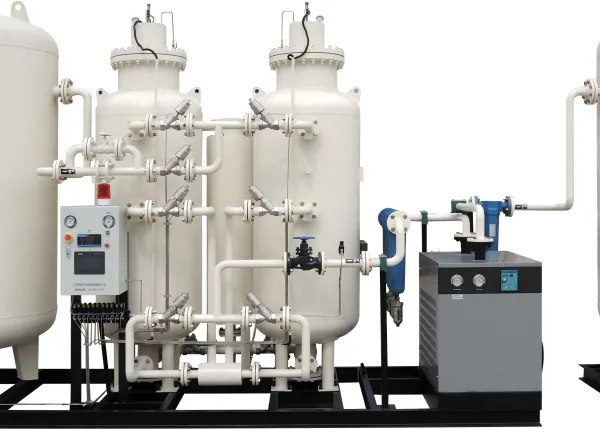
PSA Nitrogen Generator Industrial Nitrogen GeneratorNegotiableMOQ: 1 Piece
-
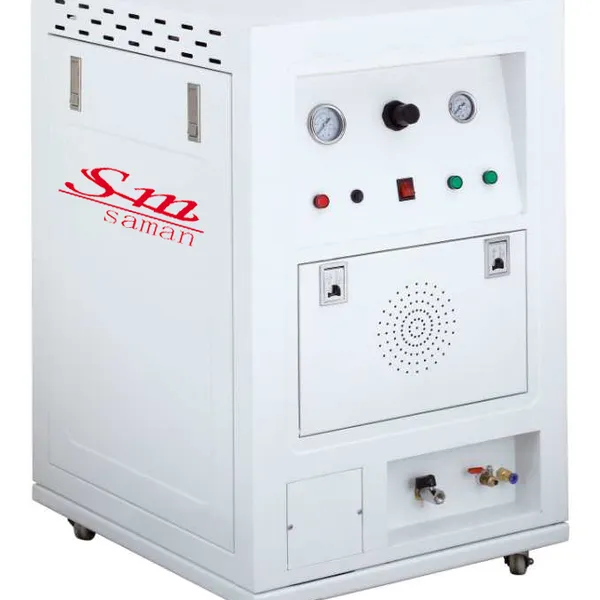
Silent Oil-free Air Compressor With Pure Gas Volume and 0 Oil ContentNegotiableMOQ: 1 Piece
-
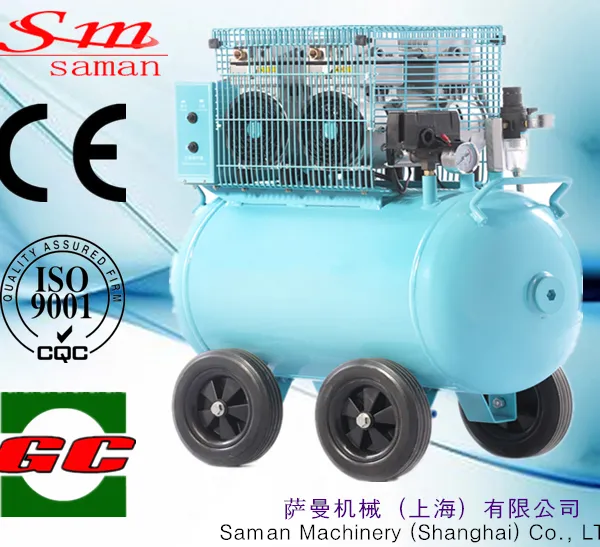
Saman Portable Medical Oil-Free Silent Air CompressorM550—M1500*4NegotiableMOQ: 1 Piece
-
Saman High-Purity PSA Nitrogen Generator SMTYN01-SMTYN49NegotiableMOQ: 1 Piece
-
Saman Screw Air Compressor Manufacturer Directly Sells Products. There Are a Wide Variety of Models and Complete Series Available.NegotiableMOQ: 1 Piece
-
Saman Oil-free Vortex Air Compressor MW-11 - High-efficiency and Energy-saving Oil-free Air CompressorNegotiableMOQ: 1 Piece
-
Saman Oil-free Screw Air Compressor, Factory Direct Sales, Stable Quality, High Efficiency, and High Air OutputNegotiableMOQ: 1 Piece
-
Saman Permanent Magnet Variable-frequency Screw Air Compressor, Highly Efficient and Energy-savingNegotiableMOQ: 1 Piece
-
PSA Nitrogen Plant、Membrane Nitrogen Generator、Liquid Nitrogen Generator、Cryogenic Nitrogen PlantNegotiableMOQ: 1 Piece
-
Screw Air Compressor Three Filters, Air Filter Element, Oil Filter Element, Oil Separation ElementNegotiableMOQ: 1 Piece
-
Saman Permanent Magnet Variable Frequency Screw Air Compressor MV-150ANegotiableMOQ: 1 Piece
-
Saman PSA Nitrogen Generator One-stop Service Provider for High-quality Nitrogen SolutionsNegotiableMOQ: 1 Piece
-
Saman Screw-type Air Compressor, Permanent Magnet Variable-frequency Air Compressor, Double-stage Compression Screw Air CompressorNegotiableMOQ: 1 Piece
-
The Saman Mobile Screw Air Compressors Can be Divided Into Diesel Mobile Screw Air Compressors and Electric Mobile Screw Air Compressors.NegotiableMOQ: 1 Piece
-
Saman Pressure Swing Adsorption Nitrogen Generator, One-Stop Service for High-Quality Nitrogen SolutionsNegotiableMOQ: 1 Piece
-
Saman Screw Air Compressor Specializes in Providing Complete Air Compressors and Three-filter Consumables.NegotiableMOQ: 1 Piece
-
Saman Screw Vacuum Pump, With a Complete Range and a Wide Variety of Options, Offering High Selectivity.NegotiableMOQ: 1 Piece
-
Saman Permanent Magnet Variable Frequency Screw Air Compressor MV-150A, With a Power of 110KW and a Flow Rate of 20m³NegotiableMOQ: 1 Piece